Why a Horse’s Training Program Should Be Built Around More Than the Next Competition
Competition dates provide useful targets, but a horse’s development cannot revolve entirely around the next show. Freddie Vasquez Jr. explains that effective training requires a longer view, balancing preparation with conditioning, fundamentals, recovery, and the horse’s individual needs.
A competition can reveal progress, but it represents only a small portion of a horse’s overall training. What happens in the weeks between events often determines whether performance stays consistent throughout a demanding season.
A Competition Is a Checkpoint, Not the Entire Goal
Horse shows naturally influence training schedules. Riders know when they need to compete and which skills will be tested.
However, treating every training session primarily as preparation for the next event can narrow the program too much.
A horse may need to improve balance, responsiveness, strength, adjustability, or confidence even when those areas will not produce an immediate competitive result.
Long-term training asks a broader question: what does this horse need to become stronger, more capable, and more consistent over time?
That perspective allows competition to become one measure of development rather than the sole purpose of every ride.
Fundamentals Still Matter Between Shows
Competition horses perform specialized tasks, but those performances depend on basic skills developed away from the show ring.
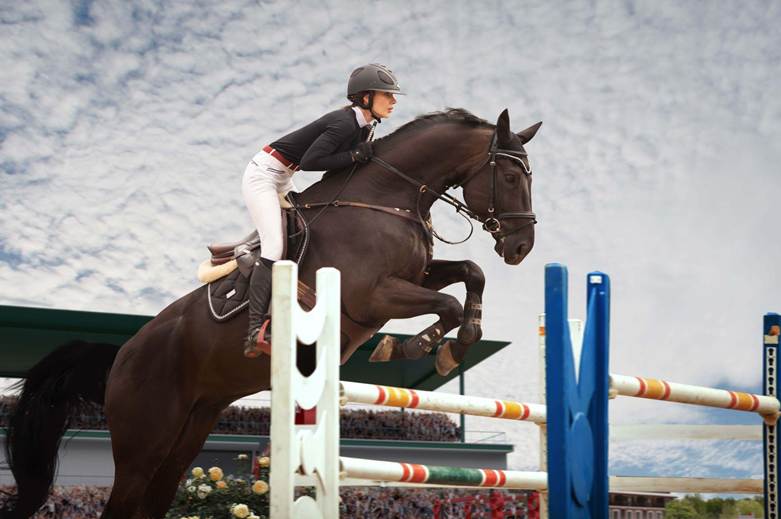
For jumping horses, flatwork can support many qualities needed over fences. Rhythm, balance, transitions, straightness, responsiveness, and the ability to lengthen or shorten the stride can influence how a horse handles a course.
Constantly practicing full courses does not necessarily strengthen every underlying skill.
Sometimes a training session may be more productive when it concentrates on transitions, lateral work, adjustability, or another fundamental rather than jumping.
These quieter sessions may not resemble competition, but they help develop the tools required when technical questions appear in the ring.
Fitness Needs to Develop Gradually
A horse may be talented enough to perform a particular exercise before having the conditioning to repeat it comfortably throughout a season.
Fitness develops through consistent work.
Depending on the horse and its competitive level, a program may incorporate flatwork, jumping, walking, turnout, conditioning exercises, and other appropriate activities.
The objective is not simply to make every session physically demanding.
Training needs enough variation and progression to build fitness without turning every day into a test.
A horse preparing for multiple competitions may require a different workload from one returning after time away. Age, experience, physical condition, and competition schedule can all influence what is appropriate.
Every Horse Responds Differently to Work
Two horses competing at the same height may need very different programs.
One may benefit from frequent schooling because repetition builds confidence. Another may understand its job well and perform better with fewer jumping sessions between competitions.
Some horses maintain fitness easily. Others require more structured conditioning. One may become sharper after several lighter days, while another settles into its work through consistent routine.
This is why a training program cannot be based entirely on the competition calendar.
The calendar tells the trainer when the horse is expected to perform. It does not automatically determine what that individual horse needs every day before the event.
Observation remains essential.
Recovery Is Part of Training
Rest can sometimes be mistaken for time when training is not happening.
For an equine athlete, recovery is part of the program.
Travel, unfamiliar environments, warm-up sessions, competition rounds, and changes in routine can create physical and mental demands. Afterward, immediately returning to maximum training intensity may not always be appropriate.
Recovery does not necessarily mean complete inactivity.
Depending on the individual horse, lighter work, turnout, walking, or another suitable routine may help create a transition back into regular training.
The important point is that workload should not be measured only by how much a horse can accomplish on a particular day.
A sustainable program considers how training, competition, and recovery fit together.
More Jumping Is Not Always Better Preparation
When a jumping competition approaches, repeatedly schooling courses can seem like the most direct form of preparation.
Yet jumping is only one part of producing a successful round.
A horse also needs to respond to changes in pace, remain balanced through turns, maintain rhythm, and listen to the rider before and after a fence.
If those fundamentals need improvement, simply adding more jumps may not address the underlying issue.
A horse that becomes difficult to adjust between fences may benefit from work focused specifically on responsiveness. A horse losing balance in turns may need exercises away from a complete course.
Training becomes more purposeful when exercises are selected because they address a particular need rather than simply resemble competition.
Training Should Leave Room for Mental Freshness
Physical readiness is only one consideration.
Horses can also benefit from variety in their routines.
Repeating the same exercises every day may not be necessary for a horse that already understands them. Changing the type or intensity of work can help prevent training from becoming overly repetitive.
That might mean incorporating different flatwork exercises, using varied environments when appropriate, or scheduling lighter sessions between more demanding days.
The exact approach will differ among horses.
The broader principle is that preparation should build willingness and confidence rather than simply increase the volume of work as competition approaches.
Show Results Need Context
A clear round or strong placing can indicate that parts of a training program are working well. A disappointing result can reveal areas that deserve attention.
Neither should automatically determine the entire direction of training.
Competition includes variables that do not exist at home. A horse may encounter a new environment, unfamiliar jumps, different footing, weather, travel, or a challenging course.
One result therefore provides information, not a complete assessment.
After a show, it can be useful to identify specific patterns.
Did the horse remain responsive throughout the course? Was maintaining rhythm difficult? Did fatigue become noticeable? Was the horse confident in an unfamiliar environment?
Those observations can guide future sessions more effectively than focusing only on the final placing.
The Calendar Should Support Development
Competition schedules can become crowded, particularly when riders have access to many attractive events.
More opportunities do not automatically mean that every opportunity should be used.
A horse may occasionally benefit from remaining home to train, recover, or consolidate recent progress.
Choosing competitions strategically can help keep the schedule connected to broader goals.
Questions worth considering include:
- What is the purpose of attending this show?
- Is the horse physically prepared?
- Does the competition support the current stage of development?
- Has there been adequate recovery from previous events?
- Is additional training at home more valuable right now?
- What should the horse learn from this experience?
These questions shift the emphasis from simply attending competitions to using them intentionally.
Progress Is Often Built Away From the Spotlight
Horse shows make improvement visible, but much of the work behind that improvement occurs on ordinary training days.
A smoother transition, better response to the leg, improved balance through a turn, or greater confidence in a particular exercise may seem small compared with a competition result.
Over time, those changes accumulate.
That is why a long-term program needs room for incremental progress that may not immediately appear on a results sheet.
Final Thoughts
Competition is an important part of developing many sport horses, but the next show should not become the only measure guiding daily training.
Fundamentals, conditioning, recovery, mental freshness, and individual needs all deserve consideration throughout the season.
A thoughtful program uses competitions as checkpoints. Results provide information that can influence future work, while training between events develops the skills and fitness needed for continued progress.
The strongest preparation is therefore not always the program that does the most immediately before a show. It is the one that keeps the horse’s longer development in view, allowing each competition to fit into a broader and more sustainable training process.